
 English
 French

The Terracotta Army: A Complete Guide Infographics
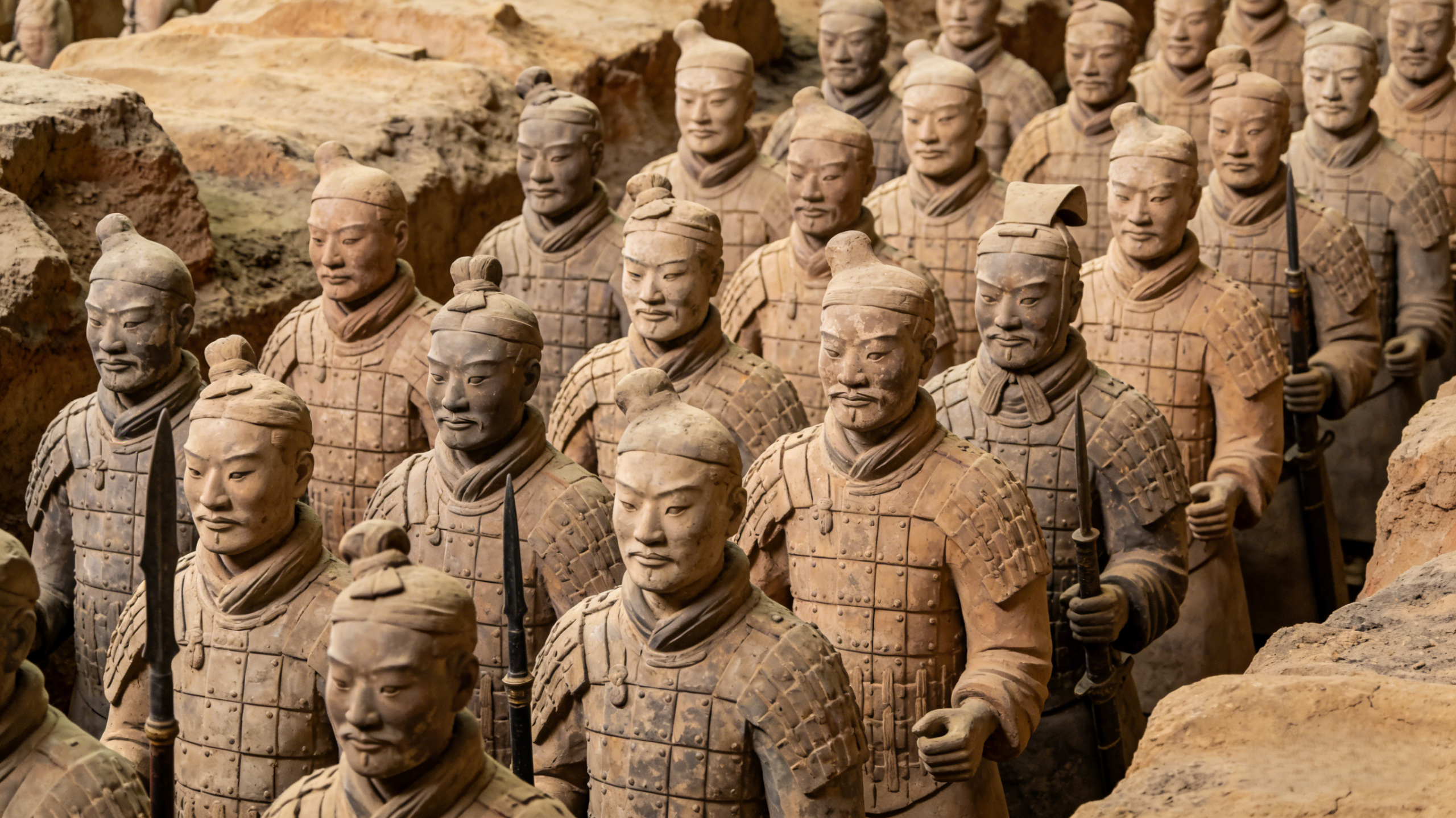
The Terracotta Army was constructed to accompany the tomb of China’s First Emperor as an afterlife guard. There are thousands of detailed life-size terracotta soldier models represent the guard troops of the first emperor — Qin Shihuang. They were molded in parts, fired, then assembled and painted.
The Terracotta Army Museum in Xi’an is a must-see. It is considered one of the greatest archaeological sites in the world, and one of the greatest discoveries of the 20th century. Find out all about the Terracotta Army: facts, how and why they were made, museum location, tours…
What to See inside the Terracotta Warriors and Horses Museum
The museum mainly consists of three vaults and an exhibition hall: Vault One, Vault Two, Vault Three, and The Exhibition Hall of the Bronze Chariots. (Vault one is usually crowded with tourists. According to our experienced guide, the best views are from the front of the vault around the corners. See the Terracotta Army Tourist Map below.)

The vaults are arrayed as the buried army was in strict accordance with the ancient directives on the Art of War: facing east towards the ancient enemies of Qin State (and towards the entrance), with Vault One on the right flank, Vault Two on the left flank, and Vault Three a command post at the rear.
Pit 1 – 2,000 Warriors Displayed

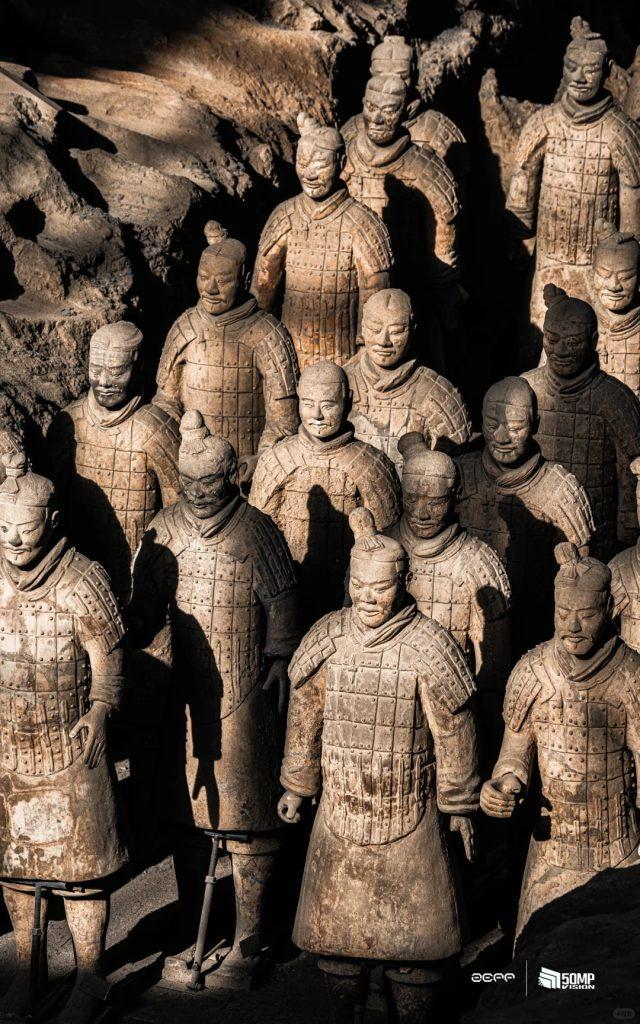
Pit 1 is the largest and most impressive – the size of an airplane hangar. It is believed to contain over 6,000 terracotta figures of soldiers and horses, but less than 2,000 are on display. All the most impressive Terracotta Army pictures were taken in Pit 1.
All soldiers and horses face east in a rectangular array, each one either armed long spear, dragger or halberd. The vanguard appears to be three rows of infantry who stand at the easternmost end of the army. Close behind is the main force of armored soldiers holding weapons, accompanied by 38 horse-driven chariots.
On the southern, northern, and western side there stand one row of figures serving as the army’s defense wing. Standing in front of such a grand ancient army array, one would feel the ground shake to the footsteps of the advancing soldiers.
Every figure differs in facial features and expression, clothing, hairstyle, and gestures, providing abundant and detailed artifacts for the study of the military, cultural, and economic history of that period.
This vault opened to visitors in 1979. It measures about 210 meters long and 62 meters wide and the bottom of the pit varies from 4.5 meters to 6.5 meters below ground level. Ten earthen walls were built at intervals of 2.5 meters, forming 9 circling corridors.
Pit 2 – Uncovers the Mystery of the Ancient Army Array

Excavated in 1976, Pit 2 stands about 20 meters north to Pit 1. As the highlight of the whole mausoleum, it uncovers the mystery of the ancient army array. It consists of four units, measuring 94 meters east to west and 84 meters south to north and 5 meters deep., forming a 6000 sq. meter built-up area.
The first unit contains rows of kneeling and standing archers; the second one is a chariot war array; the third unit consists of mixed forces with infantry, chariot and trooper standing in rectangular array; and the last one includes numerous troopers holding weapons. The four units form a rigorous battle array.
Pit 3 – Represents the Command Post
Vault Three is the smallest one. There are only 68 terracotta figures, many of which are without heads. It’s obvious that Vault Three represents the command post, as all the figures are officials.
The Exhibition of Bronze Chariots

The two bronze carriages displayed in the hall were discovered 20 meters from the west side of the Tomb of Qin Shihuang in December 1980, and were elaborately restored before exhibition.
The carriages have about 3,400 parts each and were driven by four horses. The second one is 3.17meters long and 1.06 meters high. The bronze horses vary from 65 cm to 67 cm high and 120 cm long. Each weighs 1,234 kg in total.
They were mainly made of bronze, but there were 1,720 pieces of golden and silver ornaments, weighting 7 kg, on each carriage. The carriages were so well-made, and so vivid, that they boast being the best-preserved and having the highest rank among the earliest known bronze relics in China. These chariots are the biggest pieces of ancient bronzeware ever found in the world.
How to Book Terracotta Army Tickets?
The Terracotta Army Museum has carried out real-name ticketing to control tourist traffic. People can book a ticket through its offical website.
the maximum number of visitors to the Terracotta Army each day is no more than 8,000.
Tickets are in high demand. If you want to visit it, booking in advance is recommended.
We have developed some beyond ordinary activities in Xi’an, including to discover a mysterious place to have a close experience with a Terracotta Warrior. Contact us if you want to add these activities to your itinerary.

Derrick
07-02-2025 at 08:31I can’t wait to stand in front of those ancient warriors. Just thinking about it gives me chills. It’s honestly one of the most incredible wonders in human history.
Nina
20-02-2025 at 09:35This might just be the greatest archaeological discovery in human history.
Mallory
02-03-2025 at 12:33I need to go and witness this ancient wisdom firsthand. It’s beyond anything I could have imagined.
Blakely
04-03-2025 at 08:35I’ve never felt such a powerful pull toward any ancient site before.
Alina
05-03-2025 at 13:34I can hardly wait. This is the one historical site in the world that captivates me like nothing else.
Daphne
17-03-2025 at 12:36This goes way beyond anything I ever expected from a trip.
Quentin
27-04-2025 at 06:32This is definitely something I have to see in my lifetime. The thought of witnessing an army formation from 2000 years ago actually makes my heart race.
Kendrick
12-10-2025 at 07:33It’s truly unbelievable! I absolutely have to go there myself and feel that awe in person.